
How to Choose the Best Medical Alert System for Your Parent's Needs
Mar 5th 2026
Table of Contents:
- What Is a Medical Alert System and How Does It Work?
- Understand Your Parent’s Specific Needs and Lifestyle
- Research the Different Types of Medical Alert Systems
- Compare Features, Quality and Reliability
- Consider Costs and Subscription Plans
- Evaluate Customer Support Services
- Research Customer Feedback and Testimonials
- Conclusion
As parents age, medical alert systems offer peace of mind by providing an easy way for them to get help in emergencies. To choose the right one, you should first understand your parent's specific needs, including mobility, mental capacity, health conditions and lifestyle. Then, research different system types, compare features, consider costs, evaluate customer support and read customer reviews.
As your parents get older, roles start to reverse, and it can become your responsibility to take care of them.
With life’s other responsibilities to consider, you can’t be at your parent’s side at all times, and it can be challenging to make sure they are safe and protected in your absence.
That’s where medical alert systems come in. By giving seniors an easy way to request help in emergencies, you can enjoy the peace of mind that your parent is safe, even when you are not with them.
This guide from Medical Care Alert explores everything you need to know about choosing the best medical alert system for your parent. Learn how to understand your parent’s needs and which features to look for.
What Is a Medical Alert System and How Does It Work?
Medical alert systems are valuable tools that can help coordinate emergency care for individuals in need — particularly vulnerable seniors, like older parents.
Medical alert devices have emergency buttons that individuals can press when they experience a medical emergency. Some other types of alert systems use special motion sensors to detect if the person has fallen. When these systems are activated, they let somebody know that the individual is in danger. Most alert systems notify a dedicated emergency response team, a group of family members, caregivers or local emergency services, like the paramedics.
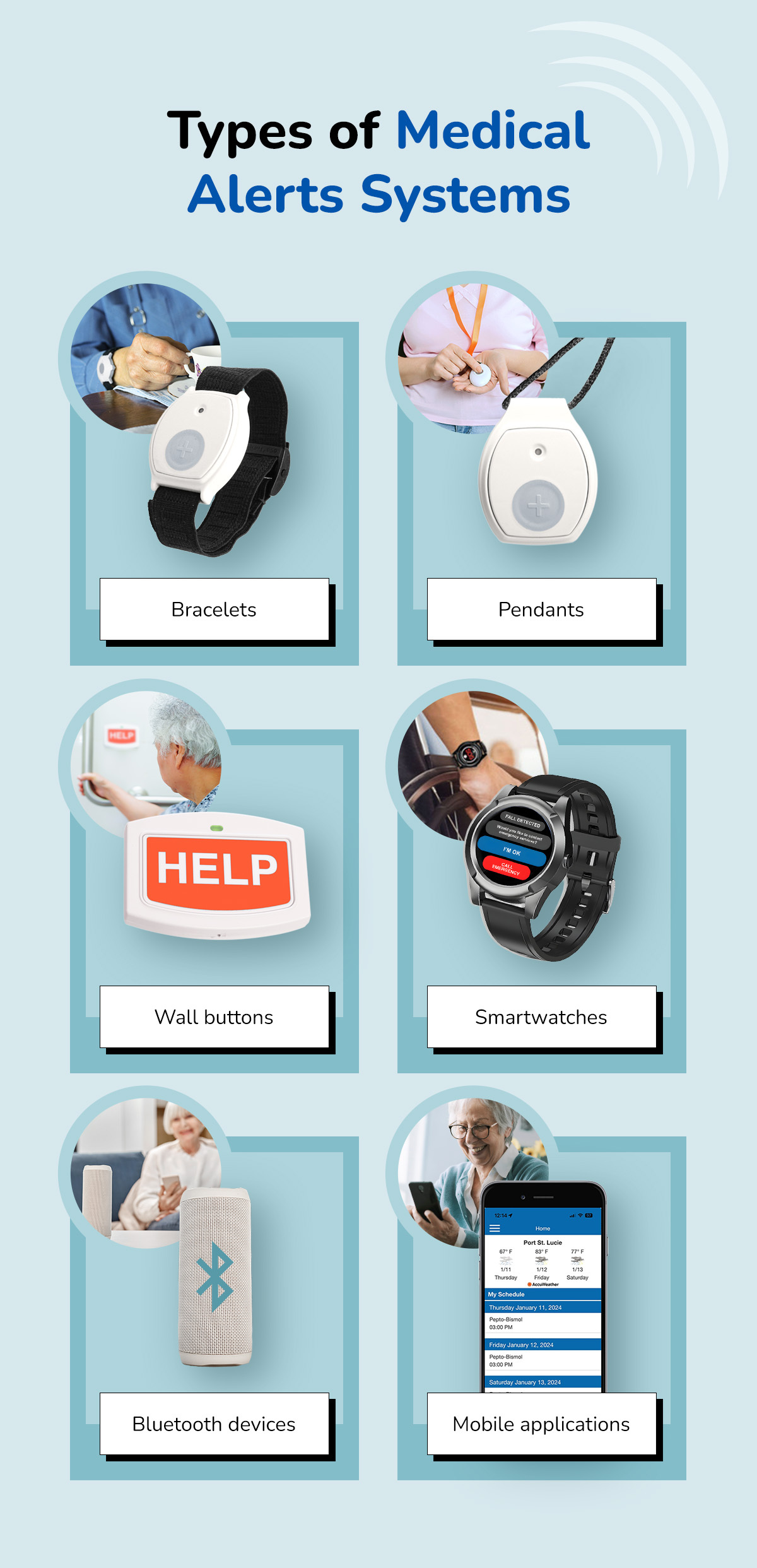
Medical alert systems can come in many different forms, including:
- Bracelets
- Pendants
- Wall buttons
- Smartwatches
- Bluetooth devices
- Mobile applications
These special safety tools give your vulnerable family members an additional layer of security. They provide you with the peace of mind that, in the event of a medical emergency, your parent has an extra way to ask for help.
Understand Your Parent’s Specific Needs and Lifestyle
When finding the right medical alert system for your parent, one of the best things you can do is try to understand their unique needs, lifestyle and health.
Before comparing different products, you should have a strong understanding of what your loved one needs from a medical alert system. Speak with your parent’s health care providers, like their doctor, nurse, therapist or physical therapist, to evaluate their current needs. You should also figure out what types of support they might need as time goes on.
Among other factors, you should consider your parent’s mobility needs, mental comprehension and existing health conditions.
Mobility
When looking for a medical alert system for your parent, consider their mobility, or how easily they can move around by themselves.
To help you figure out which type of alert system is right for them, think about:
- Their activity levels: Different types of alert systems suit different activity levels. For example, if your parent is very active and leaves their home regularly, they may need a mobile alert system.
- Their fine motor skills: Different systems use different activation methods. These include buttons, pull cords and voice activation. If your parent struggles with their fine motor skills, they may not be able to use their hands and fingers to activate an alert. They might need an alert system that does not require any button pressing or typing.
- Where they spend their time: You caninstall devices in high-risk areas of your parent’s home. For example, bathrooms can be a high-risk area for individuals with low mobility.
- Their risk of falling: If your parent has a high risk of falling over, consider a medical alert system that uses automatic fall detection technology.
Mental Capacity
Alongside your parent’s physical abilities and challenges, it is important to understand how their mental function and understanding will affect which medical alert system is right for them.
Some mental factors to consider include:
- Memory: Portable devices sometimes require the user to remember to wear them. Other devices require the user to find or charge them. Depending on how good your parent’s memory is, they might need a system with automatic charging reminders, a long battery life or one that cannot be taken off.
- Communication: Consider whether your loved one will be able to verbally communicate with an operator when an alert is triggered. If not, they might need a communication-free system that is programmed to contact the emergency response center or family members automatically.
- Technology: It is important to understand how comfortable your parent is with using technology. For example, consider whether they will be able to use an interactive app, or if a simple, one-button device would suit them better.
- Potential for wandering: If your loved one experiences cognitive issues or has a history of wandering, choosing an alert system with a built-in GPS tracker or geofencing programming can help keep them safe.
Health Conditions
Considering your parent’s existing health conditions can help you understand which features they require and which type of alert will suit them best.
Health-related factors to consider include:
- Hearing: If your parent has impaired hearing, you should look for devices or alert systems that cater to their needs. For example, some systems vibrate for those who may have trouble hearing an audible alert.
- Medication: For individuals who might benefit from reminders to take their medication, you can choose a system that lets them know when it is time to take it.
- Cognitive decline: Seniors with dementia and other mental challenges can experience confusion and disorientation. In these cases, they may need alert systems with extra features.
Other Lifestyle Factors
As well as their physical and mental health, you need to think about how other parts of their lifestyle might affect your decision:
- Caregivers: If your parent does not have a live-in caregiver, they might need more safety features around the house.
- Wearability: Some wearable alert devices are nonremovable, while others can easily be taken off. Consider which kind of device would suit their lifestyle, and think about whether they need a device with a discreet or unnoticeable design.
- Water resistance: If your parent enjoys swimming or needs to wear their device at all times, they might need a waterproof system.
- Multilingual support: If your parent speaks a foreign language, make sure that the medical assistance provider can communicate in your parent’s preferred language.
Research the Different Types of Medical Alert Systems
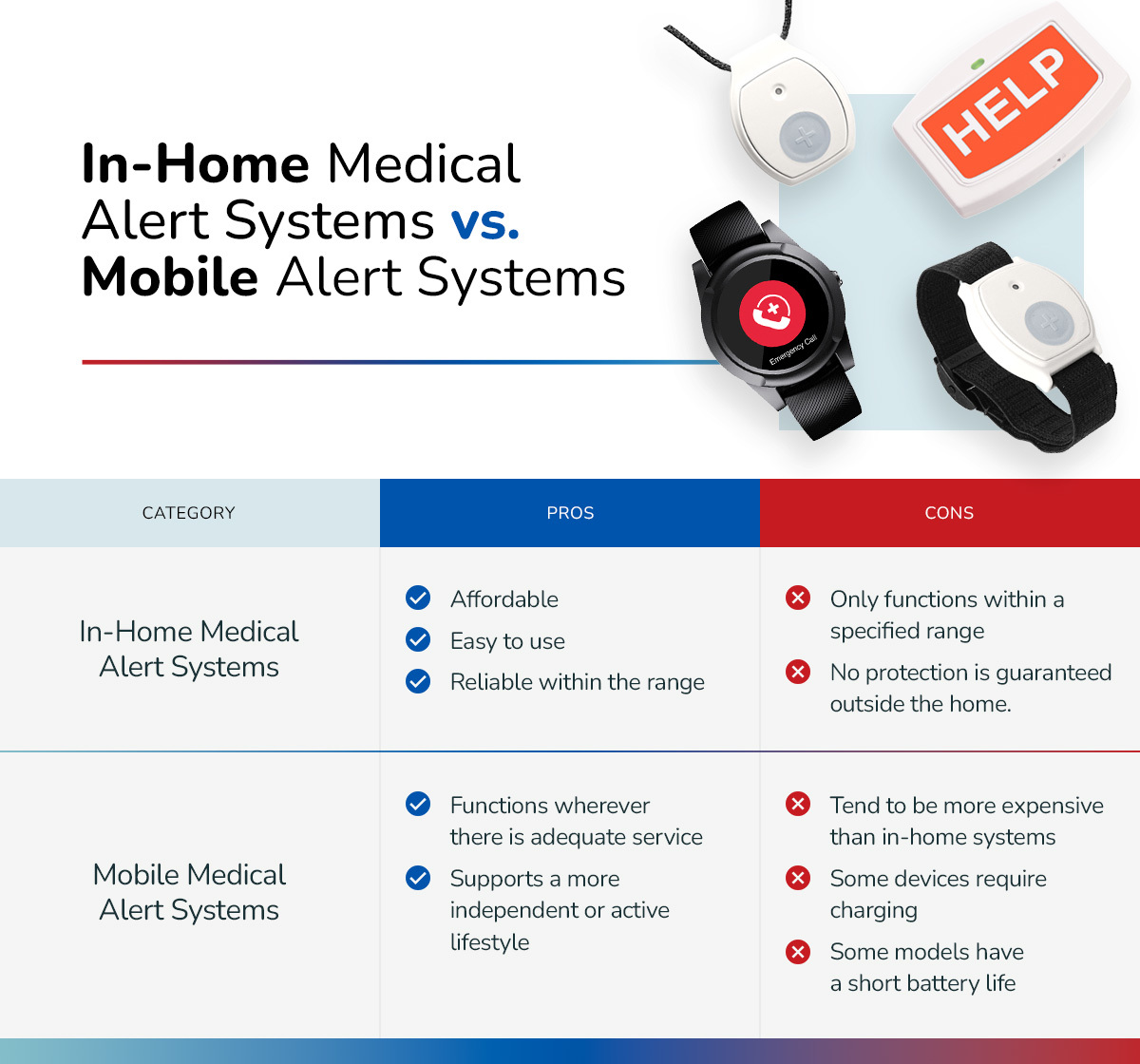
Every individual has their own needs, and there is a range of medical alert systems to choose from.
Once you understand your parent’s specific requirements, look into the main types of medical alert systems available and figure out which one will work best for them. Each has its own benefits and drawbacks, depending on what your parent needs.
In-Home Medical Alert Systems
An in-home medical safety system is a popular type for individuals who spend most of their time at home. It usually includes a physical base unit that is connected to your landline or a cellular network, and which features a two-way communication system. When the base unit is alerted to an emergency, users can use the two-way system to speak with the designated emergency response team.
Many in-home medical alert systems also come with a wearable button, which the user can press to alert the base unit when they are in need, as long as they are in range of it.
Pros of in-home medical alert systems:
- They are affordable.
- They are easy to use.
- They are reliable within the range.
Cons of in-home medical alert systems:
- They only function within a specified range.
- No protection is guaranteed outside the home.
Mobile Medical Alert Systems
Unlike the large base units used for in-home systems, mobile medical alert systems are small, portable and often built into wearable devices, such as smartwatches, necklaces and pendants.
Mobile systems are not limited to use in your home and can work wherever the right cellular service is available. Usually, mobile systems use the cellular service of the company that created and distributed your specific system.
When the user presses the button on their mobile alert system, the device connects them directly to the related response team or preassigned emergency contacts. By eliminating the need for a base unit, mobile alert systems are less restrictive than in-home systems.
Pros of mobile medical alert systems:
- They can function wherever there is adequate service.
- They are not limited to use in the home.
- They support a more independent or active lifestyle.
Cons of mobile medical alert systems:
- They tend to be more expensive than in-home systems.
- Some devices require charging.
- Some models have a short battery life.
Compare Features, Quality and Reliability
Medical alert systems not only differ in type, but also in their features. It’s important to consider what features are most important in a medical alert device, such as:
- Connection type: Medical alert systems can either be connected to your landline or a cellular network. Before choosing a system with cellular connectivity, consider how reliable the network coverage is in your parent’s area.
- Monitored vs. unmonitored: Monitored systems protect your loved ones by ensuring their activity is monitored by trained staff members with access to their location, personal information and emergency contact details. Unmonitored systems, on the other hand, relay emergency alerts to 911, to officers who have neither your loved one's details nor their list of people to notify.
- Medication reminders: If your parent takes medication and experiences memory loss or other cognitive challenges, they might benefit from an alert system that reminds them to take their medication.
- Response time: Depending on your location, your service provider's location and connectivity type, the response times for medical alert systems can vary significantly. While most companies use overseas agents to monitor alerts, the best providers have monitoring centers based in the U.S., manned by EMT- or EMD-certified agents. If your loved one has existing medical conditions that require immediate attention, or for increased peace of mind, consider choosing a system with a faster response time.
- GPS tracking: If you choose a mobile alert system for your parent, built-in GPS tracking can give you and the monitoring center access to their whereabouts at all times and help locate them in emergency situations.
- Caregiver notification: Different systems have different ways of notifying loved ones and caregivers. The best systems have multiple methods of notification and contact you via both call and text.
- Two-way communication: Depending on your parent’s preferences, you might want to choose a system that allows them to communicate verbally with an operator when a medical emergency occurs.
- Fall detection: Some alert systems have built-in fall detection programming, which uses sensors to determine when a user has fallen over.
- Comfort and discretion: If you are looking for a mobile system with a wearable button or device, consider how comfortable and discreet it will be for your parent to wear.
- Battery life: Portable safety devices tend to be battery-powered and require charging. Depending on your loved one's mental capacity and lifestyle, choose a system with a longer battery life.
- Warranty: Medical alert systems can be an expensive investment, so it is important to compare your options when it comes to product warranties.
- Contract terms: It's best to avoid companies that require you to sign long-term contracts. While many providers require three-month minimums and up to three-year lock-in agreements, the right company doesn't restrict your options.
Consider Costs and Subscription Plans
Medical alert systems come in many different forms, with varying benefits, providers and features. With these differences come a wide range of costs.
When comparing medical alert systems, determine how well they suit your budget and long-term financial goals. Costs to consider include:
- Equipment costs.
- Monthly monitoring fees.
- Contract terms and subscription fees.
- Activation fees.
- Installation fees.
If you are looking for a system that offers good value for money, you can also research upcoming sales and available promotions.
Evaluate Customer Support Services
When you invest in a medical alert service, you are not just buying a product — you are buying into an experience.
Different companies have different approaches to customer care and support. You need to find a provider whose mission, values and support services align with the needs of you and your loved one.
Examples of valuable customer support services include:
- Professional installation.
- 24/7 service.
- Always-open monitoring centers.
- Accessible online resources.
- Free key lock box for responders.
- Multiple communication channels.
- Billing and account management.
- Returns processing.
- Free system testing.
Research Customer Feedback and Testimonials
To truly get an idea of a product's or service’s effectiveness and quality, look into customer testimonials and reviews from the companies you are considering.
Exploring real customer experiences can provide you with:
- Valuable and unbiased insights.
- Decision-making guidance.
- Purchasing confidence.
Protect Your Loved Ones With a Medical Alert System
Watching your parents get older isn’t always easy, and you might feel concerned for their personal health and safety. For seniors who want to age in place at home, medical alert systems give them an extra layer of security in emergency situations.
With so many options to consider, it is important to find a medical alert system that suits your parent’s lifestyle, health conditions and personal needs.
Free Brochure
By Mail
Or call us at
855-272-1010
